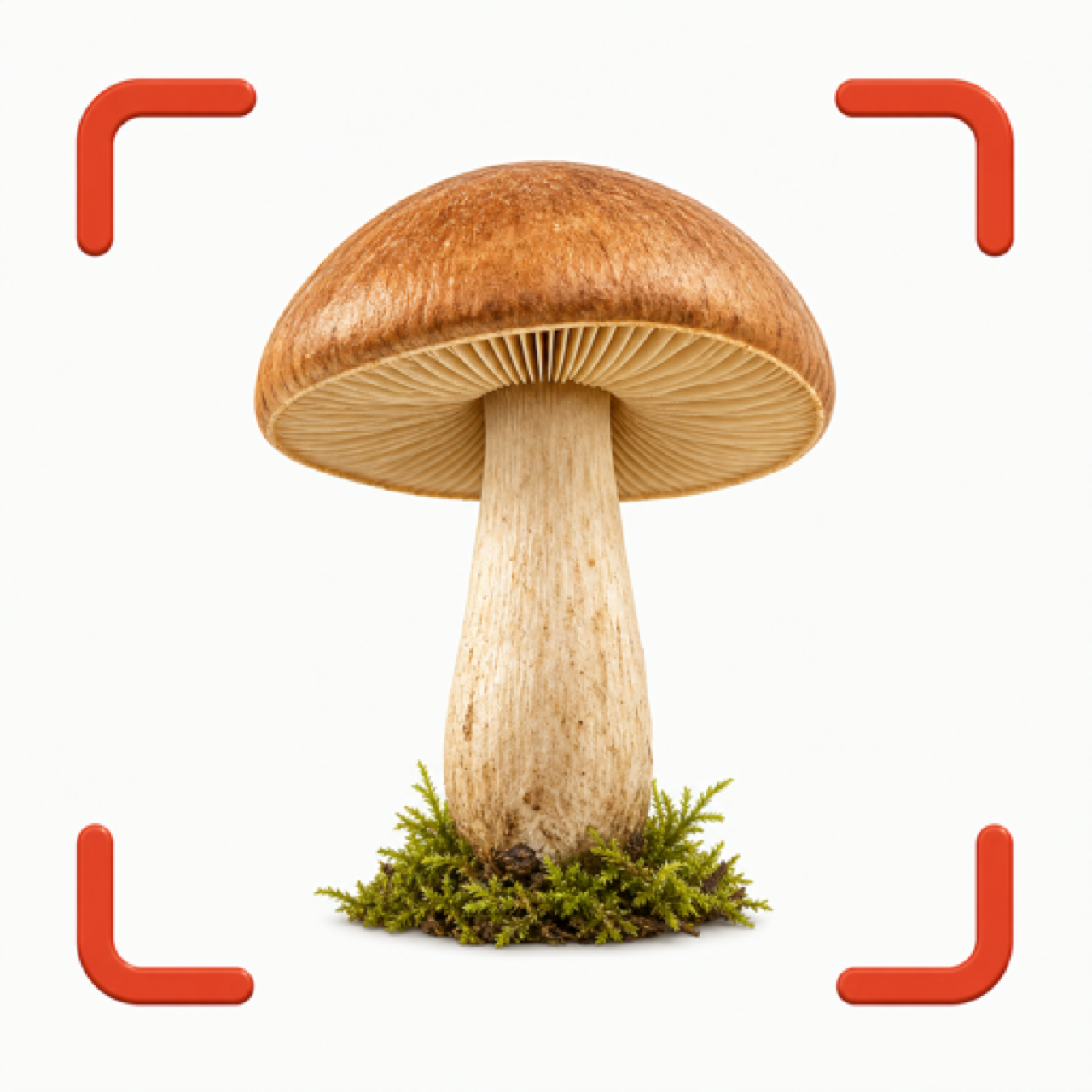
Fungi identifier: reading the clues under the cap
From mycelium networks to fruiting-body anatomy — understand what makes fungi a kingdom of their own, and how to tell families apart.
What makes fungi different from plants
Fungi occupy their own biological kingdom, separate from plants and animals. Unlike plants, they contain no chlorophyll and cannot photosynthesise — they obtain nutrients by secreting enzymes and absorbing digested organic matter from the substrate around them. The visible mushroom is only the reproductive fruiting body; the organism itself is a network of thread-like hyphae (mycelium) that can extend through wood or soil for metres. Understanding this hidden architecture helps explain where and why certain mushrooms appear. Saprotrophic fungi decompose dead wood; mycorrhizal fungi form intimate partnerships with tree roots; parasitic species colonise living hosts. Each ecological mode leaves observable clues: substrate type, proximity to specific trees, and season of fruiting are all part of the identification picture.
Major fungal groups and their field signatures
The macrofungi most observers encounter fall into a few broad morphological groups. Gilled mushrooms (Agaricales) are the largest order — their key features are described by gill attachment, spore colour, and ring or volva presence. Boletes (Boletales) replace gills with a spongy pore layer beneath the cap and often bruise blue when cut. Polypores produce shelf-like or bracket fruiting bodies from wood and lack gills entirely, with pores on the underside instead. Chanterelles are recognised by their wavy, forking false-gills (actually ridges) and a characteristic fruity scent. Learning to place a specimen in the correct group immediately eliminates hundreds of irrelevant possibilities and focuses attention on the diagnostic features that matter most for that group.
Using MushroomLens to narrow a field identification
MushroomLens processes photos of the cap surface, underside, and stem to extract morphological features and compare them against a database of documented species. The app returns a ranked list of candidate species with confidence scores, and highlights which visible features contributed to each match. This workflow is most powerful when used alongside direct observation: photograph the specimen carefully in multiple orientations, note the substrate and surrounding vegetation, and let the app suggest candidates while you continue to cross-check with a regional field guide. The combination of AI-assisted visual matching and on-the-ground contextual data produces a narrower and more reliable shortlist than either approach alone.
FAQ
What is the difference between a bolete and a gilled mushroom?
Boletes have a spongy layer of tiny tubes (pores) beneath the cap instead of gills. When the cap is turned over, you see a dense matrix of small holes rather than blade-like gills. This is immediately visible without tools. Many boletes also bruise blue or yellow when cut, a reaction caused by chemical changes in the flesh — a useful identification clue to note and photograph.
Why do chanterelles have ridges instead of true gills?
Chanterelles (Cantharellus species) produce forking, blunt-edged ridges that run down the stem rather than true blade-like gills. These ridges are an extension of the cap flesh rather than separate structures, which is why they fork repeatedly and feel rubbery rather than brittle. This character, combined with a fruity apricot scent and golden-yellow colouration, is a classic field identifier for the genus.
How does habitat help narrow a fungi identification?
Habitat is a powerful filter. Mycorrhizal fungi are species-specific about their tree partners — a species found only under oaks will not appear in a pure pine forest. Saprotrophic fungi are substrate-specific: some grow only on conifer wood, others on hardwood, others on dung. Entering your location and noting nearby tree species in MushroomLens lets the app weight matches by ecological likelihood, not just visual similarity.