Toxic lookalikes: why identification is for learning only
The dangerous pairs that look harmless — and the one rule that keeps you safe.
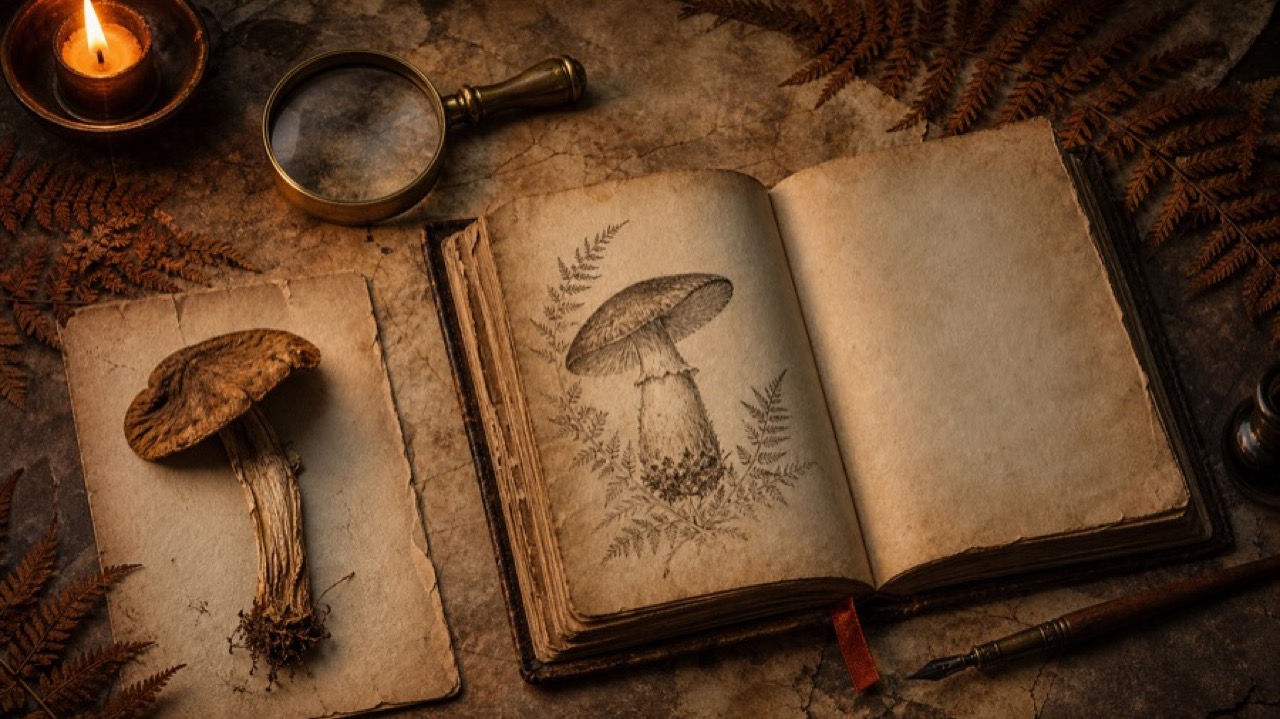
This is the guide that matters most, and its message is simple: identification is for learning, never for deciding what to eat. The reason is the existence of toxic lookalikes — species that mimic harmless-looking mushrooms closely enough to fool experienced people, where a single mistake can be serious or fatal. Understanding why they're so dangerous is the point of this guide. Acting on an identification to eat a wild mushroom is not something this guide, an app, or any article can ever sanction.
Why toxic lookalikes are so dangerous
A toxic lookalike is dangerous precisely because it doesn't announce itself. It can share the cap color, the general shape, even the habitat of a familiar species, and differ only in features you have to deliberately check — and sometimes in features you can't see at all without a microscope. Several of the most dangerous fungi look unremarkable: plain caps, ordinary stems, nothing that signals a threat. Toxicity is not written on the outside.
Worse, some serious poisonings have no early warning. Symptoms can be delayed for many hours, long after the meal seems to have gone fine, by which point real harm may already be underway. There is no taste test, no smell test, and no folk rule that reliably separates safe from dangerous.
The folk "tests" that don't work
A recurring danger is the persistence of myths that promise an easy check. None of them are reliable, and trusting any of them has led to tragedy:
- "It tastes fine." Taste tells you nothing about toxicity, and tasting a dangerous species is itself a risk.
- "Animals eat it." What other animals tolerate has no bearing on what is safe for people.
- "It didn't change a silver spoon / it peels easily / it grows on wood." These old rules are simply false and have never been a safe guide.
The only thing these myths reliably do is create false confidence.
What an app or guide can — and cannot — do
A tool like this can teach you to recognize species, understand the marks that separate close relatives, and appreciate why caution is non-negotiable. What it cannot do is tell you something is safe to eat. A confidence reading is a learning aid pointing at a likely species and its lookalikes; it is not a safety verdict, confidence is not certainty, and the very lookalikes that make confidence unreliable are often the toxic ones.
No responsible app, book, or article will ever clear a wild mushroom for the table. If a source seems to, distrust it.
The one rule that keeps you safe
Never decide whether a mushroom is edible, pickable, or safe to handle based on an app, a guide, an article, or your own identification. For anything affecting your safety, consult a qualified mycologist who can examine the actual specimen in person. That single rule, held without exception, is what keeps the hobby of learning fungi entirely separate from any question of eating them.
Learn the species. Admire them. Photograph them and build your knowledge. But keep identification and edibility in two completely separate worlds — this guide is firmly about the first and never about the second.
FAQ
Can an app or guide tell me a mushroom is safe?
No. This guide teaches you to recognize species and understand why toxic lookalikes are dangerous — it never tells you something is safe to eat. Never make an edibility decision from an app or article; consult a qualified mycologist examining the actual specimen.